Interstices
Emilio Caraffa Provincial Museum of Fine Arts | Córdoba | Dec 2009 – Feb 2010
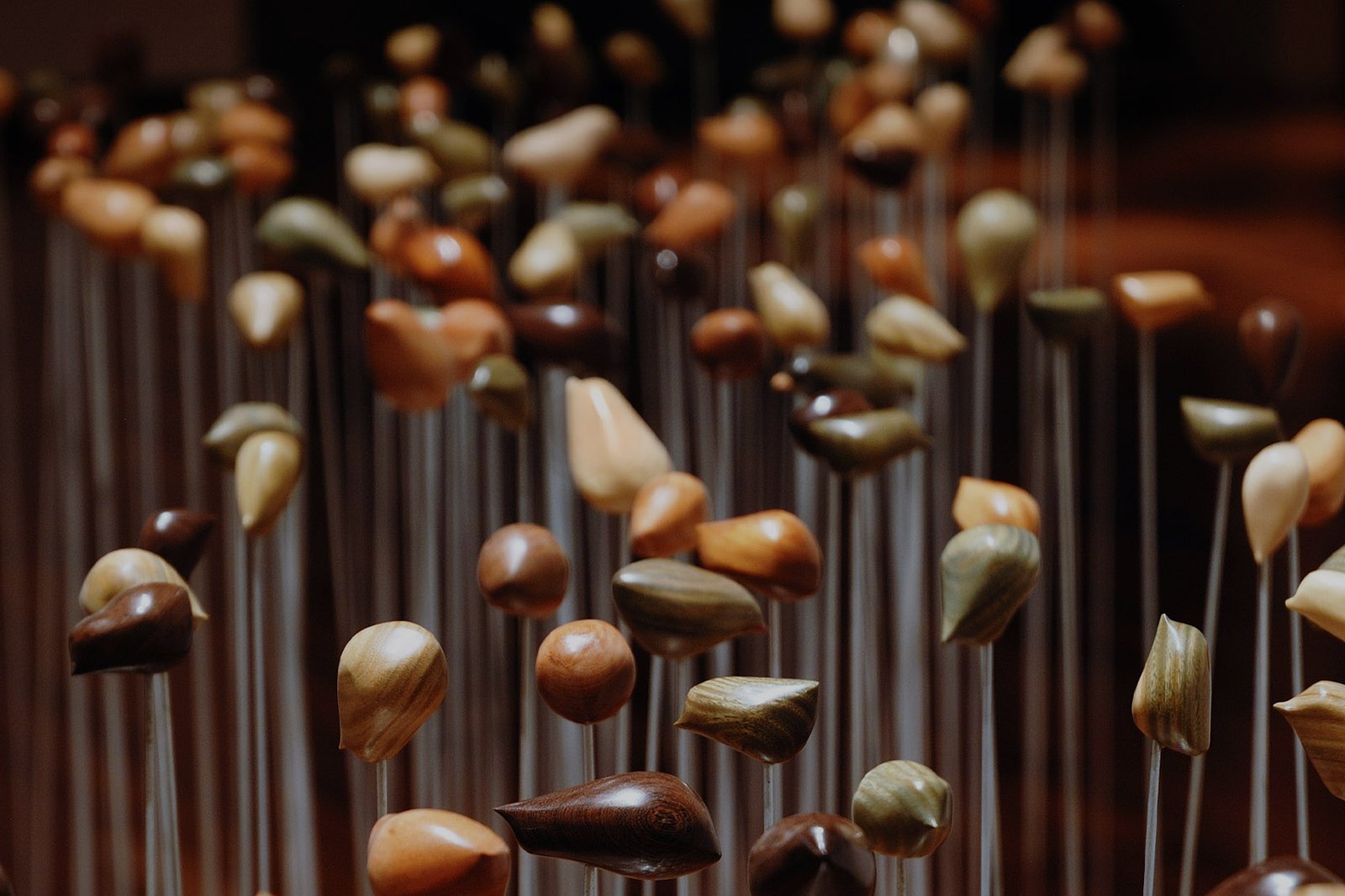
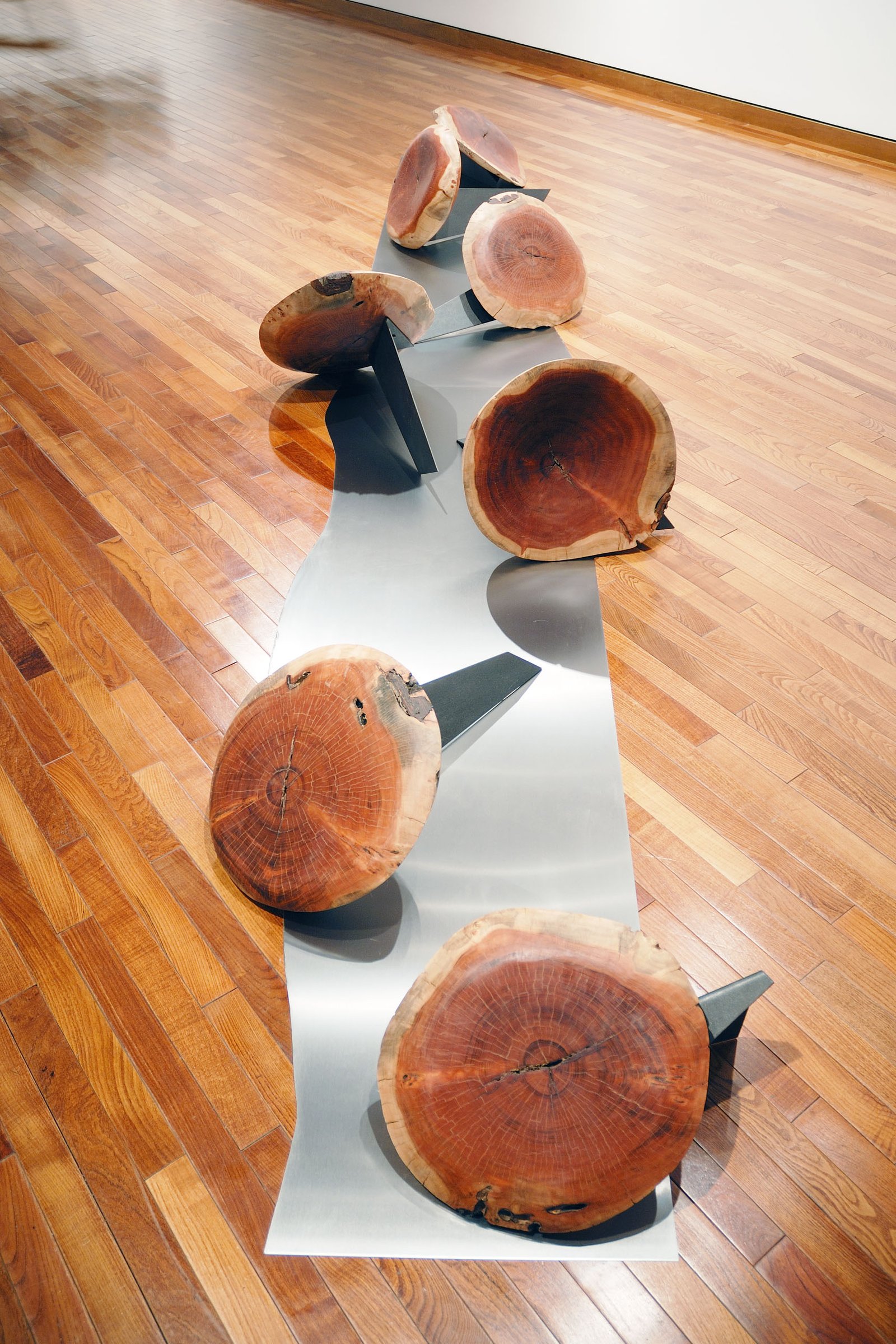
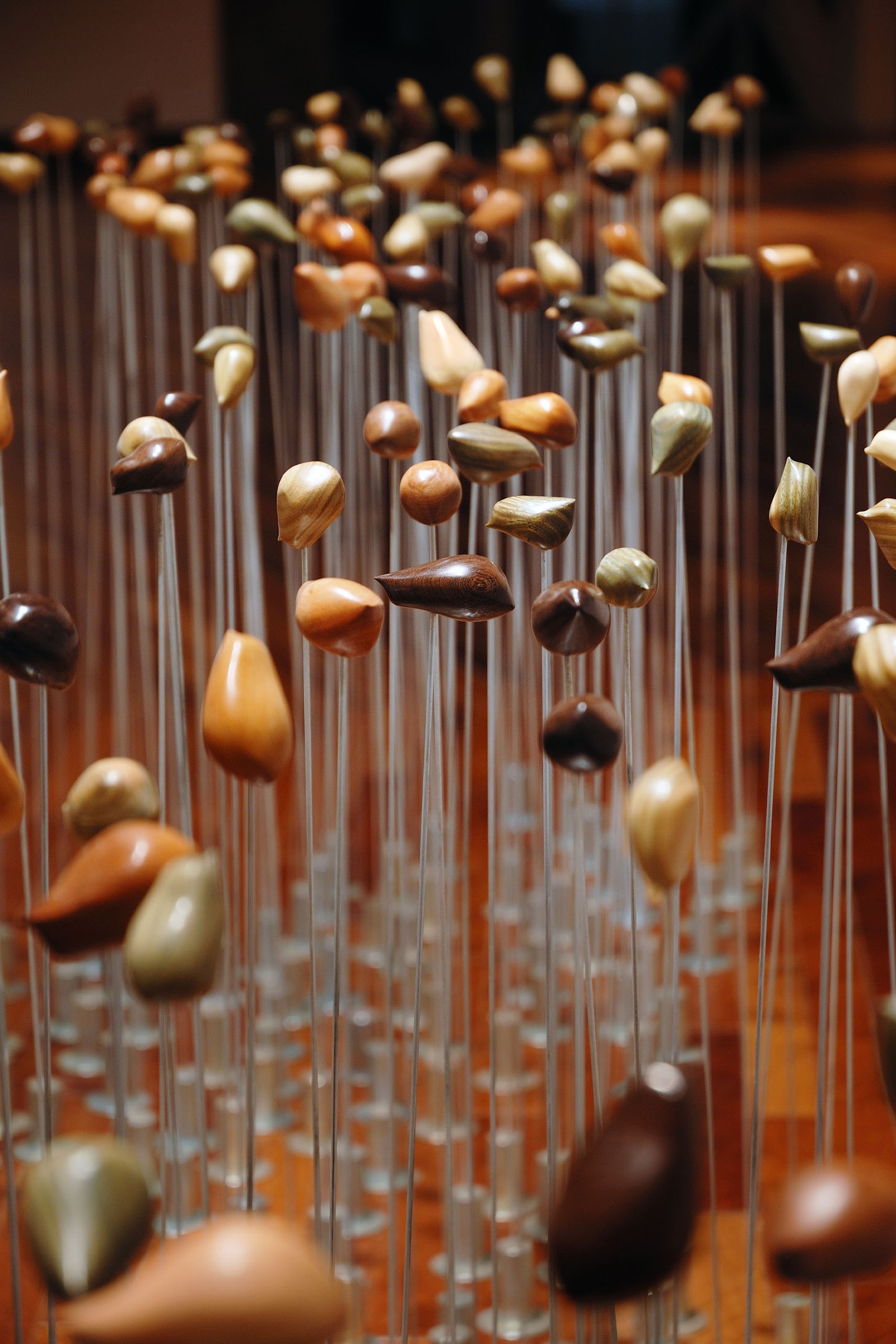
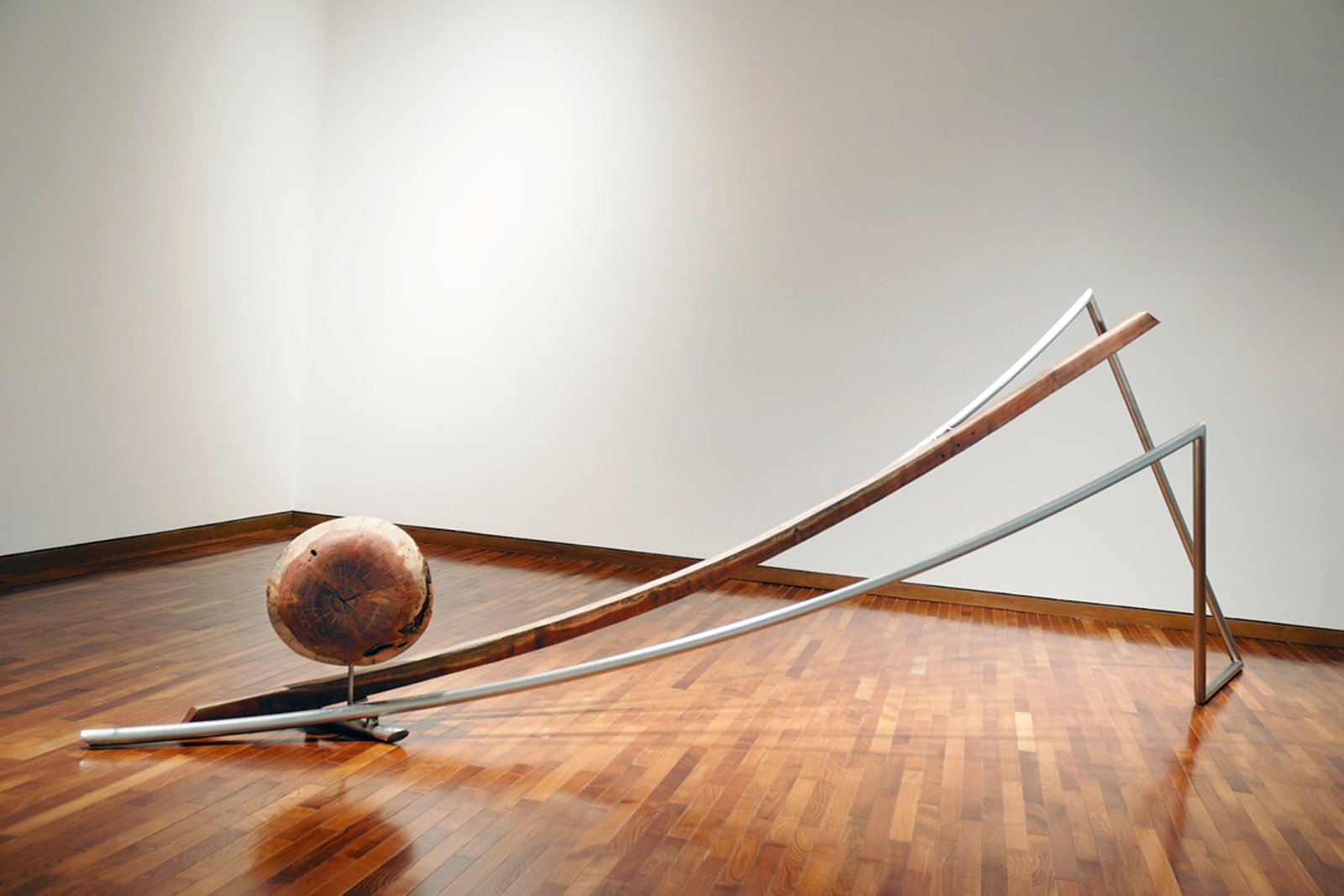
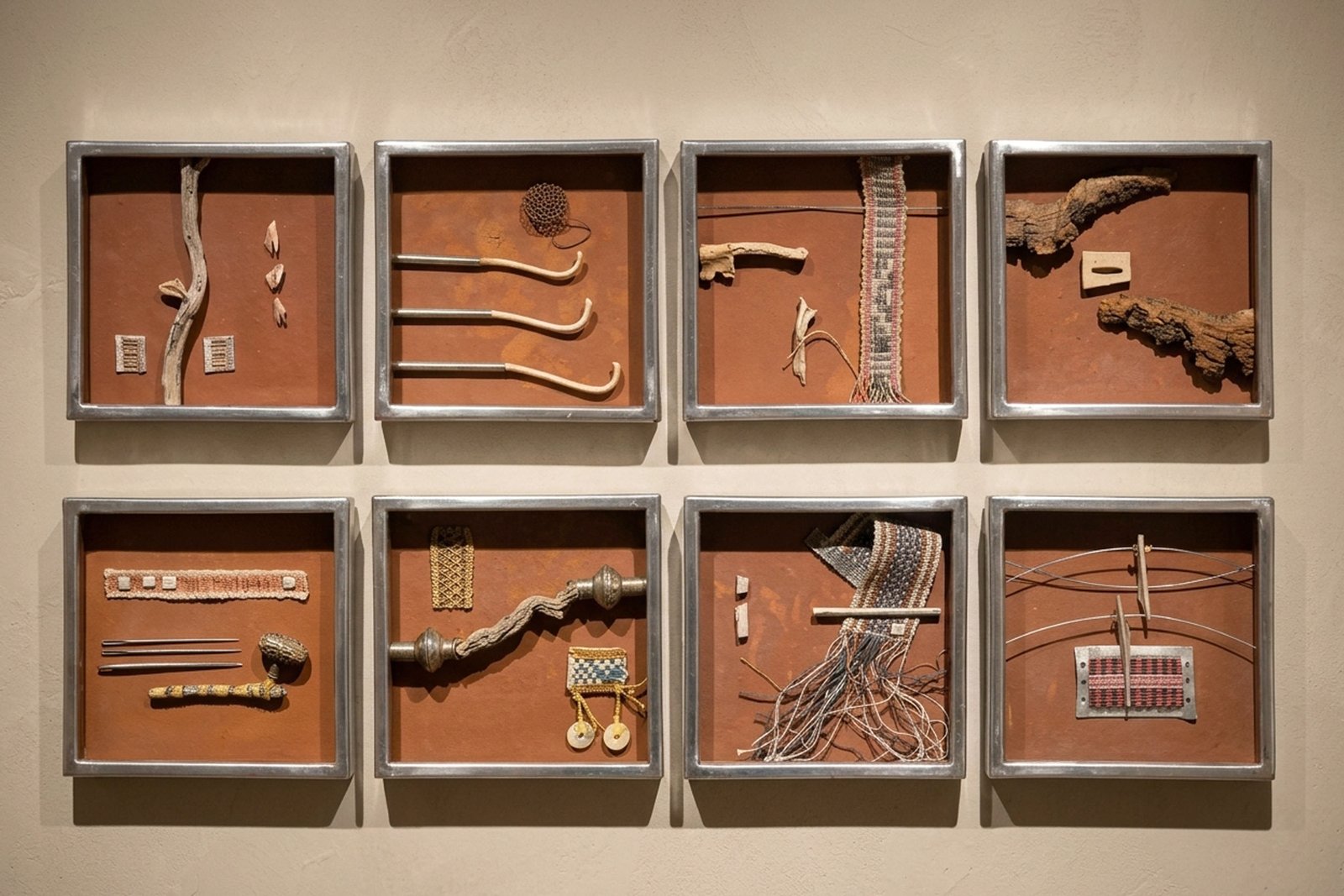
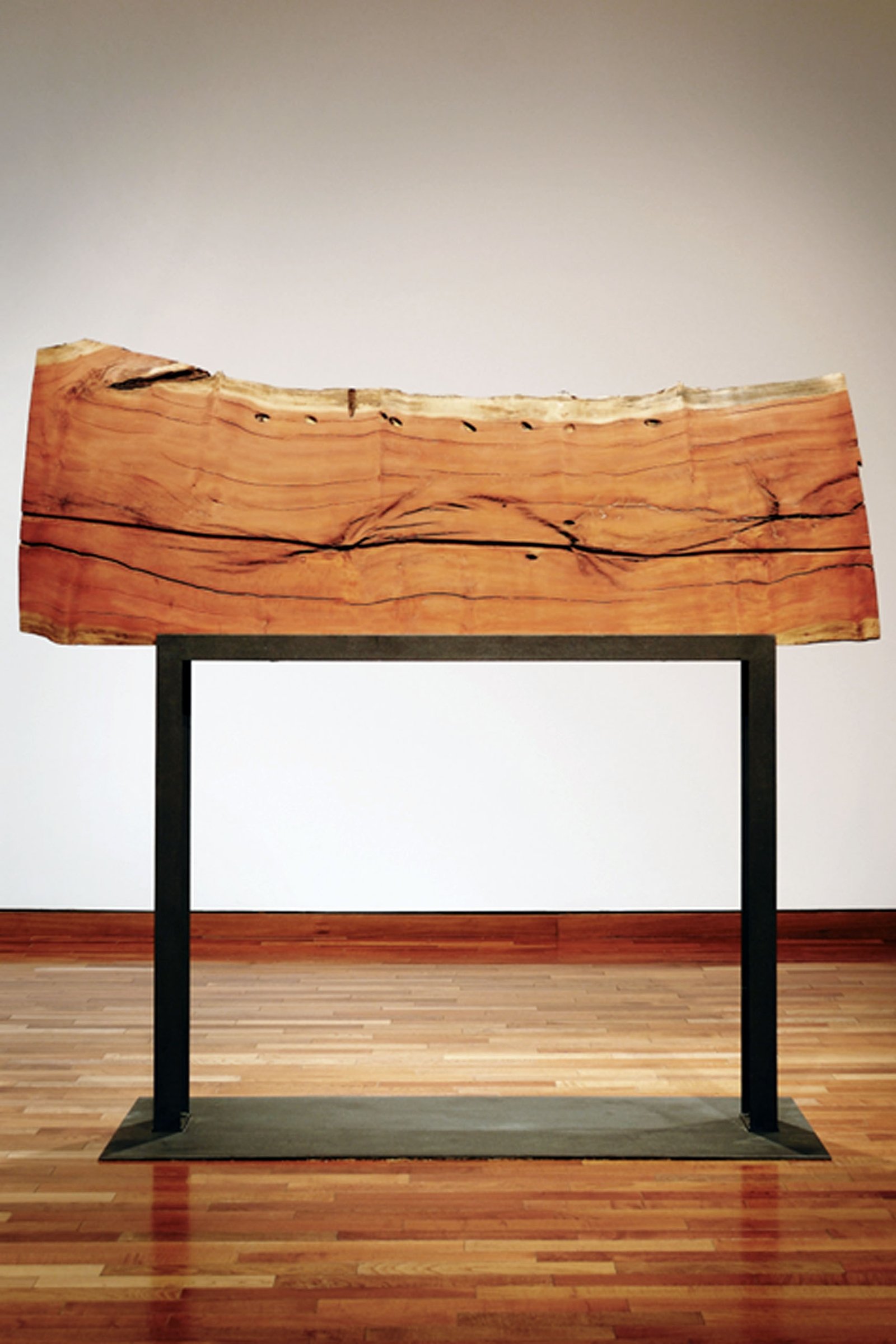
The English word “serendipity” has been translated into Spanish as “serendipia”, although it has not yet been formally incorporated into the Dictionary of the Royal Spanish Academy. It refers to making an unexpected discovery through a fortuitous or accidental occurrence. Although the term generally refers to scientific discoveries, I believe that, by extension, it could also describe the surprising interplay that Sara Galiasso’s work generates in the viewer through the unexpected reuse of traditional crafts from indigenous communities and natural remnants set within metal structures. The discovery alluded to by the unusual word mentioned at the beginning of this paragraph emerges from the statement that arises when the symbolic universe of these traditional crafts is disrupted, and from the indication of the fragile survival of the natural realm.
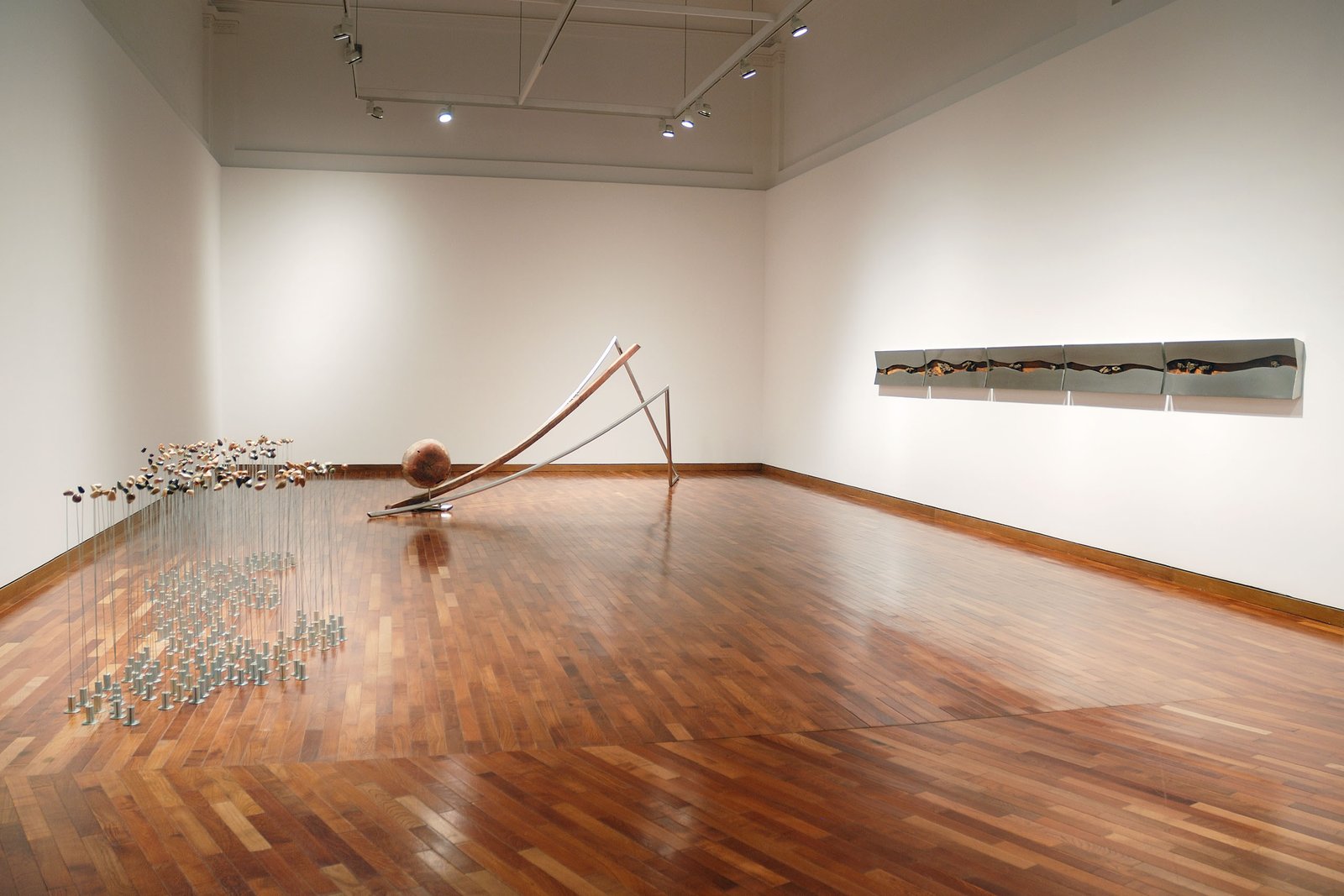
The artist’s own gesture is held back and restricted to the construction of boxes—reliquaries that, like an immobile river, run along the walls—and lines materialised in space through steel tubes. This serves precisely to point to a certain degree of informal allegiance to the cultural experiences of subaltern groups and their relationship with nature. This encounter between different worlds and ways of life seems to describe an “almost anthropological” profile—in the sense given to the term by Hal Foster—because it is the principles of the artist-explorer-traveller that establish the rules of a game which places no emphasis on social or historical determinations concerning the chosen communities or the materials encountered. These are treasured elements that the artist reabsorbs as personal history, as material evidence of her amateur explorations. A biographical mark that the artist needs to share within another framework of aesthetic existence, through a sequence of reconstruction that tends to merge the orders involved with her own imprint or, in other words, to incorporate something of the other within herself.
Ultimately, it is a matter of expanding the logic of sensory qualities which, above any other kind of statement, are perceived in terms of tactile emotion and paradoxical formal coexistence. For in the act of breathing new life into discarded objects, it becomes evident that these remnants are, for Galiasso, embodiments of time in matter, markers of endurance, deterritorialisation and transfiguration. It therefore seems no coincidence to relate this device, capable of interconnecting and expanding the concept of temporality, to Foster’s aforementioned definition, which states that “there is no simple now: every present is an asynchronous mixture of different times”. Galiasso’s work seems to speak of change without stabilising meaning, since it takes shape when the viewer-subject appropriates the formal apparatus, not so much in relation to the isolated work itself, but rather through the reconstruction of situations—encounters—within the staging of the exhibition space, in the chain of spatiotemporal coordinates that Galiasso proposes as a strategy of enunciation.
– Gabriel Francisco Gutnisky
